

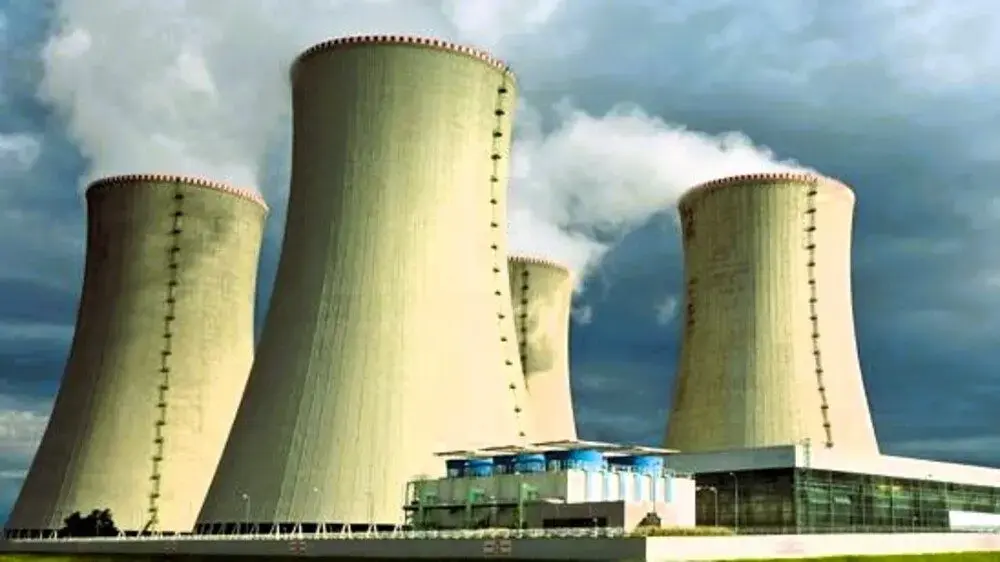
Could western Kentucky, or somewhere else in the Commonwealth, be the home for another high-energy and futuristic power plant?
It’s possible.
Energy leaders in 10 southern states, including Kentucky, are working to launch the Southeast Energy Resilience Accelerator, or SERA, group — an initiative responding to funding opportunities currently being afforded by the Economic Development Administration.
If approved at the regional, state and federal levels, this part of Kentucky might have the option to be involved.
According to the October 2025 Kentucky eClearinghouse Report, which is provided as a monthly update through the Pennyrile Area Development District, the Georgia Tech Research Corporation is beseeching Commonwealth officials to procure at least $5 million in federal appropriations — with a $1.25 million applicant buy-in — in order to:
+ Create a collaboration between the Southeast Hydrogen Energy Alliance, E4 Carolinas, several regional energy trade associations and three Georgia Tech interdisciplinary research institutes: the Strategic Energy Institute, the Advanced Technology Development Center and the Manufacturing Institute, in hopes of responding to an Economic Development Administration funding opportunity.
+ And, then, run no less than a 30-month program that could discover avenues forward in sustainable energies, and their ultimate production and distribution.
Sources indicate that initial funding, again, if approved, would come from the EDA’s FY 2025 Disaster Supplemental Implementation Path, with longer-term support expected from industry sponsors.
SERA would then serve 544 FEMA-designated disaster counties in the 2022-24 window across these 10 southeastern states — focusing on nuclear, hydrogen and similar resilient energy technologies capable of on-site fuel storage, micro-grid support or mobile deployment.
For Kentucky and the News Edge listening area, this would include Caldwell, Christian, Crittenden, Hopkins, Lyon, Logan, Muhlenberg, Todd and Trigg counties.
This is all building on prior federal funding of two completed regional studies — “The Economic Impact of the Nuclear Industry in the Southeast United States” and “The Green Hydrogen Value Chain in the Southeast United States” — which, among many insights, notes that:
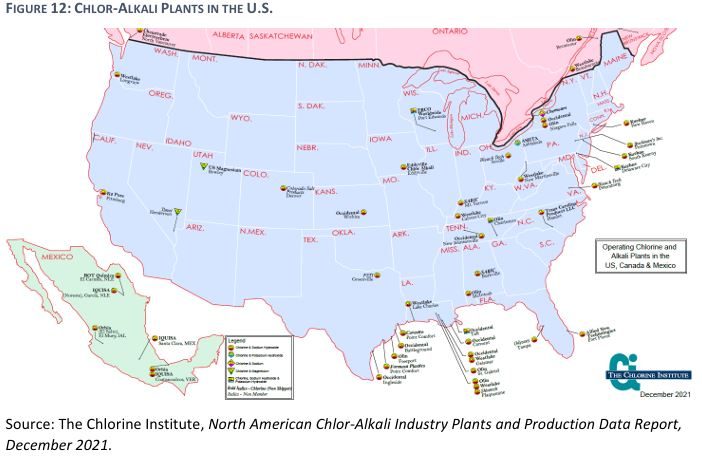
+ Hydrogen production units are located in the Southeast U.S.— primarily in Calvert City and Catlettsburg in Kentucky; Decatur, McIntosh and Saraland in Alabama; and the country has other active production units in Georgia, West Virginia, Florida and North Carolina.
+ As of 2020, Kentucky already has a varied and well-respected renewable energy profile, with 10 dams producing 7% of the state’s electricity generation, 10% of green generation came from biomass, solar accounted for 0.2% of all electricity provided, and biofuels come from two ethanol plants.
+ Christian County has a hydrogen demand of 4,000 to 10,000 kilograms per square kilometer per year.
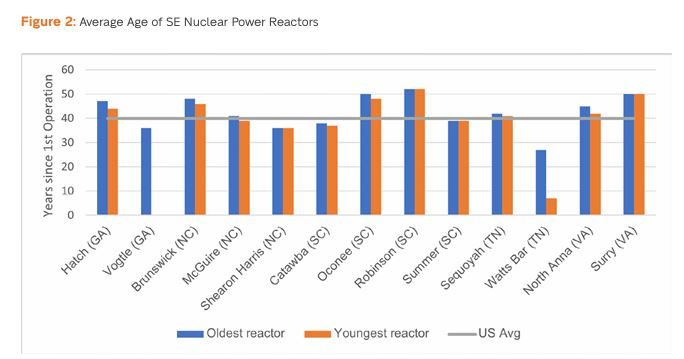
+ The Tennessee Valley Authority already has two nuclear plants in its profile, capable of producing no less than a combined 4,800 megawatts of power: Sequoyah in Soddy-Daisy, Tennessee, and Watts Bar in Spring City, Tennessee. Construction of a third unit, a small modular reactor near the Clinch River in Oak Ridge, Tennessee, is currently underway.
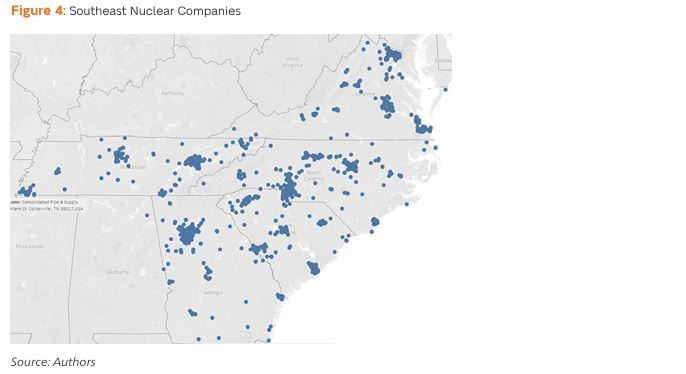
+ And the top 10 nuclear firms in the southeast are Japan’s Mitsubishi Power, London’s Rolls-Royce SMR, Pittsburgh’s Westinghouse Electric, Seattle’s Ultra Safe Nuclear Corp, Boston’s General Electric, Kansas City’s Burns & McDonnell, Japan’s Toshiba Energy Systems, Germany’s Siemens Energy, Alameda’s Kairos Power and Lynchburg’s BWX Technologies.
Specific inventories have reportedly identified more than 180 interested power companies, and nearly 20 utilities, that are willing to help SERA define resilience needs, mentor startups and host demonstrations, and SERA, if given the go ahead, will be looking to recruit early- to growth-stage companies in these 500-plus counties to be ready for “an intensive acceleration process,” in order to “support commercialization and foster partnerships that enhance disaster resilience, diversify local economies, and generate new jobs and investment.”
In a written statement to the News Edge, Southeast Hydrogen Energy Alliance Advisor David A. Doctor said the project remains in the application review stage with the EDA — which typically operates on a 90-day review cycle.
However, he noted that with the federal government being closed for six weeks, and the EDA needing to sort through its project backlog, expectations are the review “takes a bit longer.”
Related studies:
Economic impact of nuclear in SE 2024.pdf
GreenHydrogenintheSoutheastUS.pdf
2022-24 FEMA Disaster Declaration Counties in Kentucky
| Declaration | Counties (KY) |
|---|---|
| 2022 (DR 4657) | Floyd, Pike, Leslie, Magoffin, Martin, Owsley, Whitley, Lee (Member First Mortgage) |
| 2023 (FEMA-4711-DR, severe storms Feb 15–20) | Bell, Breathitt, Caldwell, Carter, Clay, Elliott, Floyd, Harlan, Hart, Johnson, Knott, Lawrence, Lee, Leslie, Letcher, Magoffin, Morgan, Owsley, Perry, Powell, Whitley, Wolfe (Federal Register) |
| 2024 (FEMA-4804-DR, storms May 21–27) | Adair, Allen, Ballard, Barren, Breckinridge, Butler, Caldwell, Calloway, Carlisle, Christian, Clay, Clinton, Crittenden, Cumberland, Edmonson, Estill, Fulton, Garrard, Graves, Grayson, Green, Hart, Hickman, Hopkins, Jackson, Knox, Larue, Laurel, Lee, Leslie, Livingston, Logan, Lyon, Marshall, McCracken, McCreary, McLean, Meade, Menifee, Metcalfe, Monroe, Muhlenberg, Ohio, Owsley, Pulaski, Rockcastle, Russell, Simpson, Todd, Trigg, Warren, Washington, Wayne, Whitley, Woodford (FEMA) |